






We use various technologies to track your identity and your interaction with our content while you are on our site. Our goal is to limit the use of this kind of technology to functions that are strictly necessary for the purpose of being a festival attendee, filmmaker, judge, or presenter. You have full control over the few exceptions that are not strictly necessary.
We do not use any first-party cookies on this site, though we do use a newer technology called "local storage" to store information about your identity and interaction with our site on your computer. We may use a third-party cookie for analytics tracking and another for your purchases. We do not use third-party cookies for the purposes of advertising or collecting information for use by third-parties.
The primary need for our storage of data on your computer is to track your authentication status and synchronize the purchases stored on the web site, thus enabling you to access the content to which you have access. When you are not authenticated, we also use this technology to track viewing of content in verification of our right to show you that content. On your profile page, you can see the information we store about you and manage it. You do have the right to be forgotten by us, but you will lose access to any purchased content should you exercise this right.
There are two non-essential functions: our use of Google Analytics to help us analyize usage of our web site and our automated watch list tracking. You may turn off one or both non-essential functions. We do ask that you allow these functions as they are used solely for the purposes of bettering this web site and are not used for advertising or sold tracking your beavhior for use by third-parties.
Click "Accept" to accept this use of cookies or "Reject" reject all but essential cookies.
This content is available only for on-demand access.
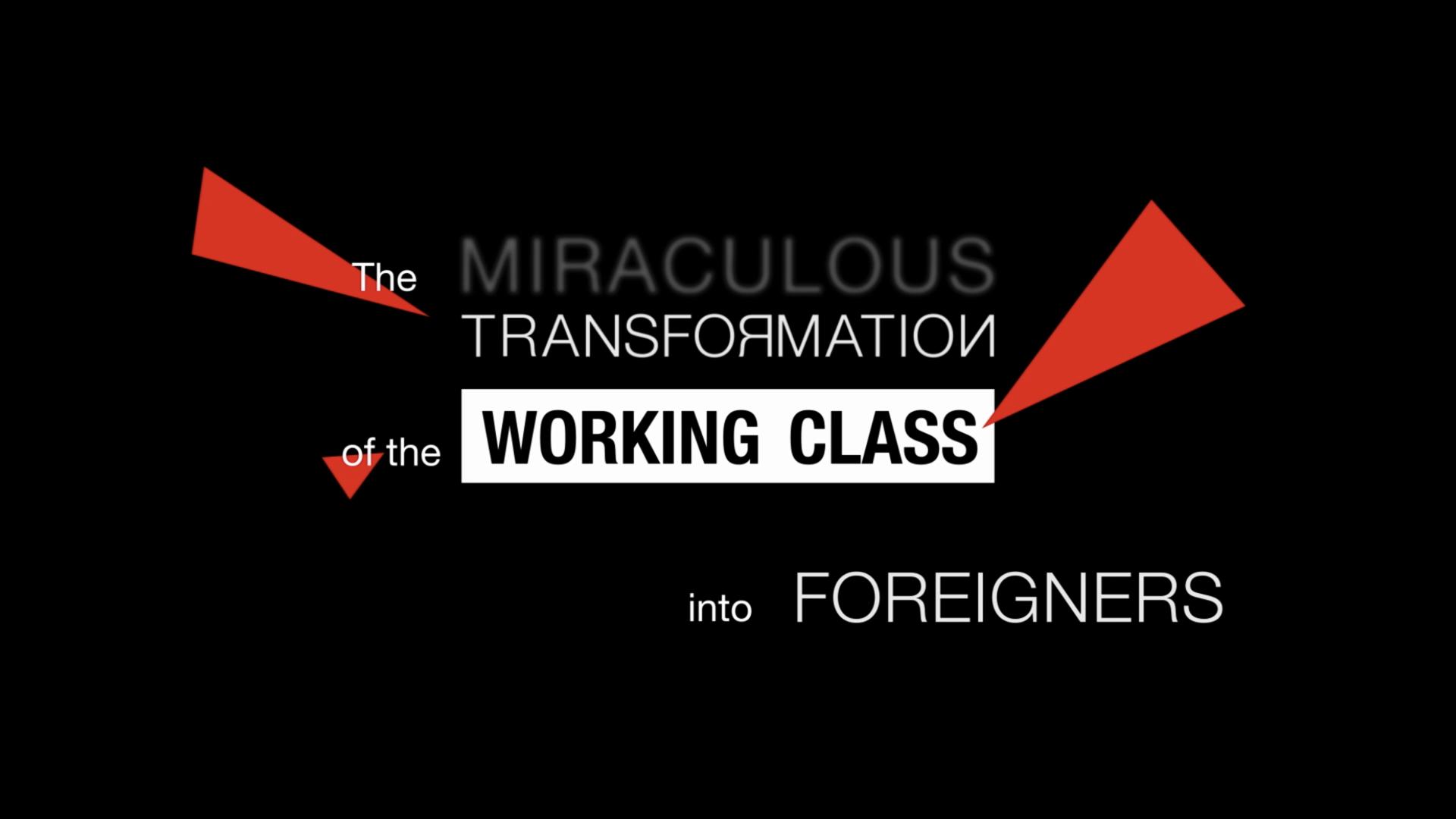
The Miraculous Transformation of the Working Class into Foreigners - Documentart
As in all industrialized European countries, social democrats and trade unions led the workers’ movement. And – although not simultaneously – these institutions had lost their impact all over Western Europe by the 1980s. Racist policies succeeded in driving a wedge between immigrant and native workers. This factor, together with the de-industrialization at the end of the 1970s, led to the decline of the classical workers' movement in Switzerland as well. Today, nobody talks about the «working class» anymore. The term «worker» has become synonymous with «foreigner». Filmmaker Samir uses private family photos, animations, music clips, and unseen archive material to tell the story of migration from Switzerland's southern neighbours in an entertaining way, from the post-war period to the present day.
No on-demand viewing option is currently available for you.